
Resilience
If you had to reduce eleven months to a single word, this is the one that survives every argument.
There is a version of this season that ends in September. Three matches on tour in Europe, three defeats, and a loss to Zebre that had never happened before in the club's history. Sides have been broken by less. Squads have been rebuilt on the back of worse starts than that.
What the Lions did instead was come home and win. Not narrowly, and not occasionally. Eight of nine at Ellis Park. Glasgow beaten by 42 points. Edinburgh beaten by 37. The Sharks and the Stormers both beaten in Johannesburg in the same campaign, the second of them delivering a trophy that had never been in the building.
Resilience is an overused word in sport, usually deployed to describe a side that lost bravely. That is not what it means here. Here it means a group that took the worst start available to it and turned the same season into the best in the club's URC history.
It is worth being precise about what changed, because it was not personnel. The squad that lost in Parma was substantially the squad that beat the Stormers. What changed was the standard the group would accept from itself at home, and then the standard it carried on the road into the second half of the campaign.
There is a version of resilience that is simply endurance — surviving until the fixture list turns kind. That is not this. The Lions did not wait out the season. They took hold of it in October and did not let go until Dublin in June.
That matters more than usual now, because 2026/27 asks a harder question. Toulouse and Saracens do not care what happened in the URC last year. But a squad that has proved it can absorb a bad month and still win a trophy is a better bet in Pool 2 than one that has never been tested.
The Lions did not wait out the season. They took hold of it in October.
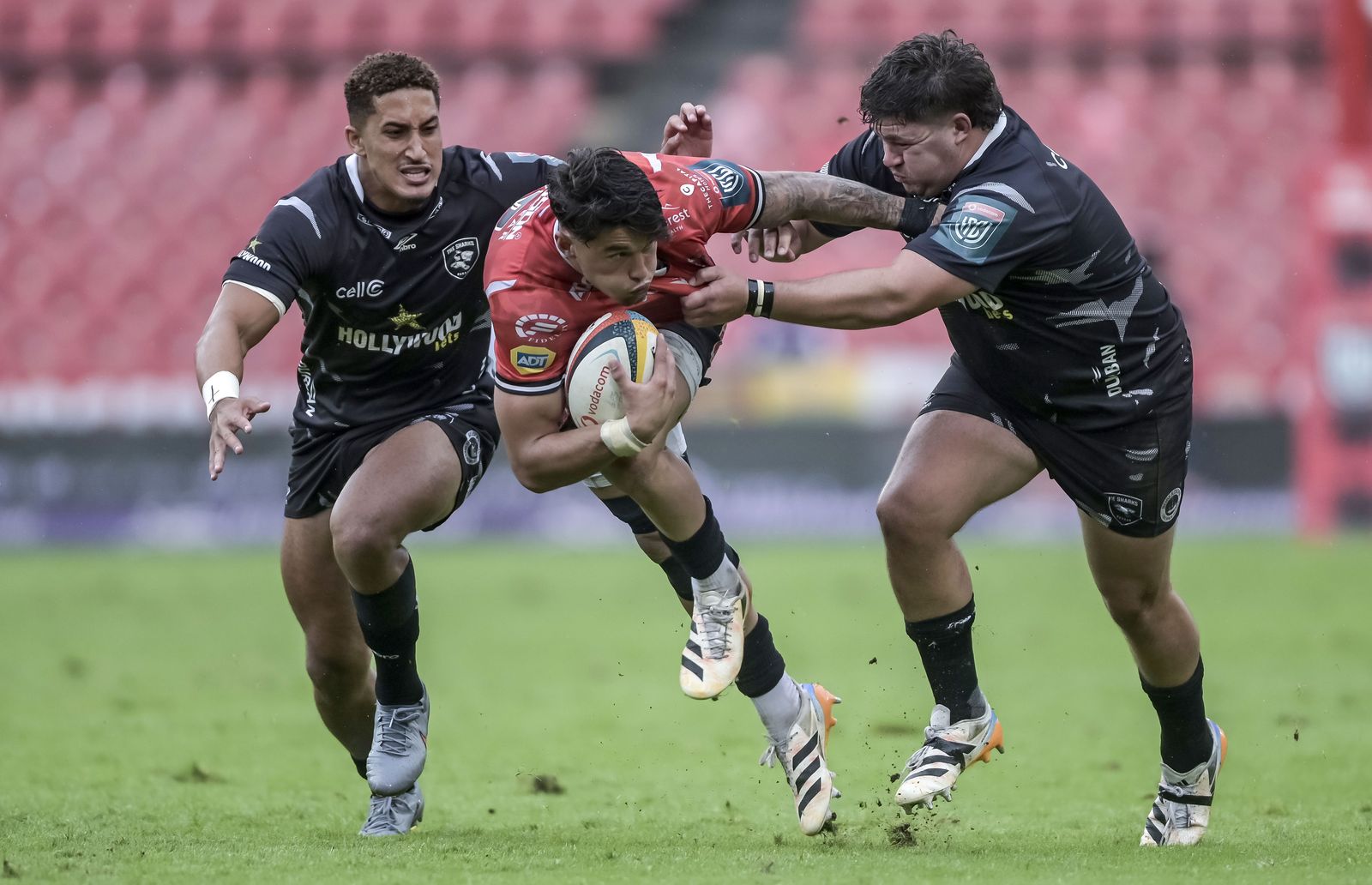
- 01Bronson Mills is tackled by Eduan Swart and Jordan Hendrikse 21_2_2026
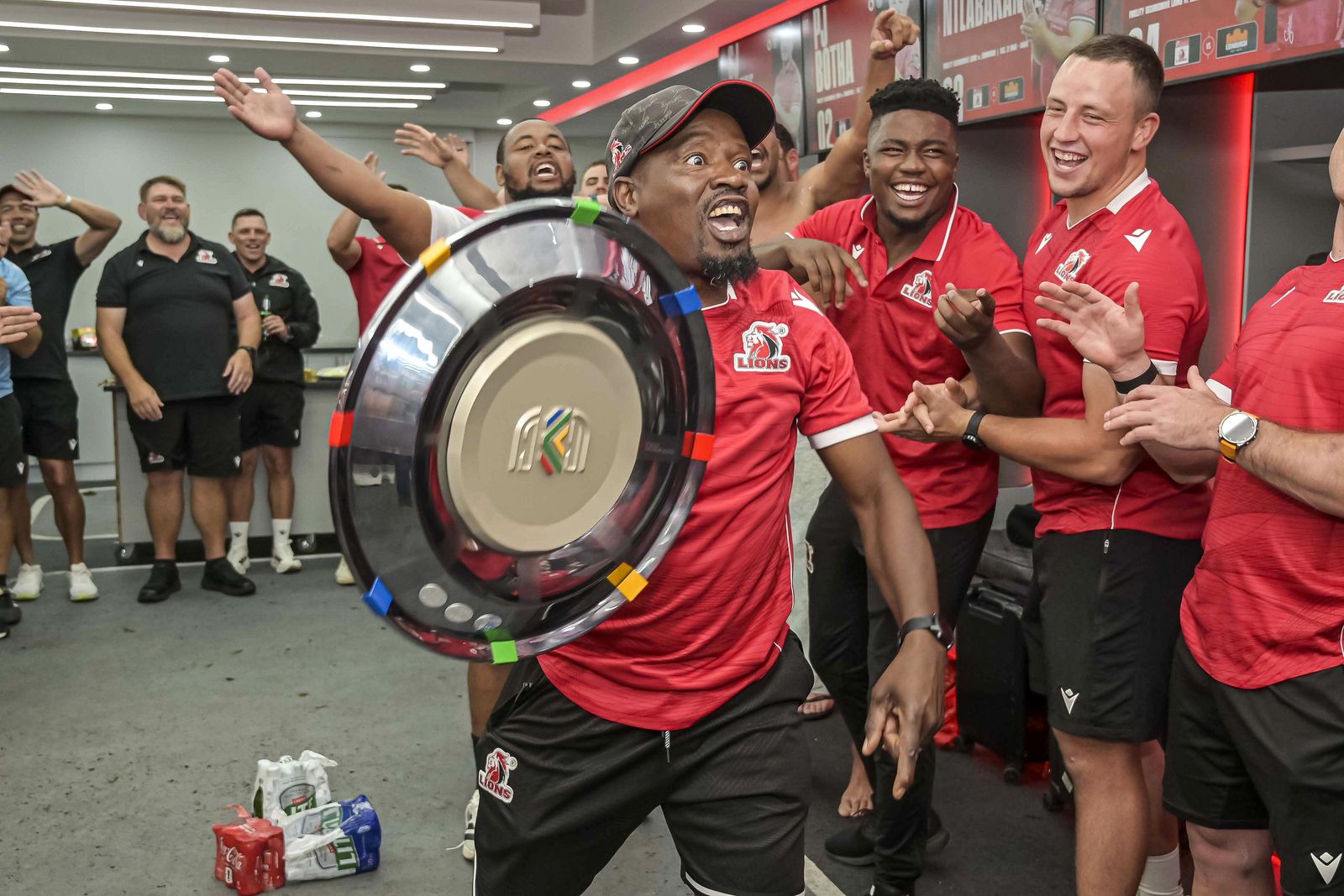
- 02Johane Singwane celebrates with the South African Shield in the changing room after the match