
Before the Gold: Rassie Erasmus's Johannesburg Years
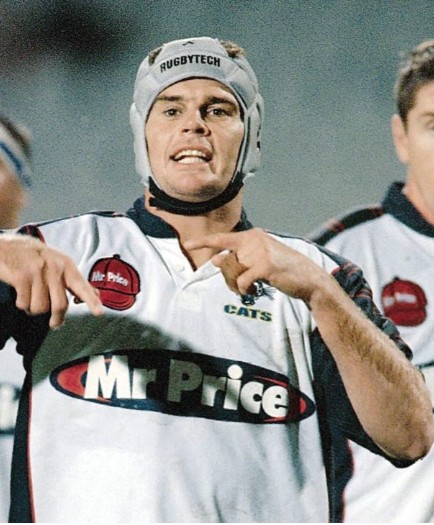
He has won two World Cups and changed how the Springboks think. His first Test cap came at Ellis Park, and his hardest lesson as a player came in a Cats jersey. This is the Johannesburg chapter most Rassie Erasmus stories skip.
He has won two World Cups and changed how the Springboks think. His first Test cap came at Ellis Park, and his hardest lesson as a player came in a Cats jersey. This is the Johannesburg chapter most Rassie Erasmus stories skip.
Ellis Park, July 1997
The first Test Johan Erasmus ever played was against the Lions. Not ours.
On 5 July 1997 the British & Irish Lions arrived at Ellis Park two-nil up with the series already won. South Africa used the third Test to look at new men, and a 24-year-old flanker from Despatch got his chance. The Springboks won 35–16.
Dead rubbers are where selectors decide who stays. Erasmus stayed. Seven weeks later he scored a try against Australia in a 61–22 win in Pretoria. He went on to play in 15 of the 17 straight Test wins South Africa strung together between 1997 and late 1998, a run that included the country's first Tri Nations title.
The Cats years
In 1998 Erasmus joined the Cats, the Super 12 franchise built on the Golden Lions and Free State. He played seven Currie Cup matches for the Golden Lions between 1998 and 2000. The provincial number is small. The franchise number is not: 46 Super Rugby appearances in four seasons.
He was handed the captaincy in 1999. In 2000 he led a side few people rated into the semi-finals, where the Brumbies beat them 28–5. It was the Cats' best stretch of the era, and the Johannesburg end of the franchise was part of it.
Then came 2001. Midway through the season, coach Laurie Mains took the armband off him. The Cats reached the semi-finals again anyway. By the end of the year both men had left, with contemporary reports pointing to the breakdown of their relationship.
What the fallout taught
Nobody outside that dressing room can say for certain what Erasmus took from losing the captaincy. But the coach he became reads like an answer to it.
He has said the things that decide rugby success are consistent selection, rhythm and momentum, a short injury list and some luck. He plans in years, not weeks. He tells players where they stand, and he tells the media too.
A captain removed mid-season by a coach who wanted something else knows exactly what instability costs a team. Erasmus has built his career on making sure his players never have to wonder.
The road back
After Johannesburg he returned to Free State, had a short spell with the Stormers in 2003 and retired. The coaching record that followed is the reason anyone outside Bloemfontein knows his name.
He won the Currie Cup with the Cheetahs in 2005, their first title since 1976, and shared it with the Blue Bulls in 2006. He ran Western Province and the Stormers, then Munster. In 2017 he became South Africa's first Director of Rugby, and in 2018 head coach as well.
The 2019 World Cup came with him as head coach. The 2023 title came with him as Director of Rugby alongside head coach Jacques Nienaber. He took the head coach's job back in 2024, and in May 2026 the government awarded him the Order of Ikhamanga.
The system he runs depends on what the franchises send it. Malcolm Marx, a product of the Lions system, was in the squad that won the 2019 final in Yokohama. Every Lions youngster who comes through the academy into a Springbok camp extends a line Erasmus himself once walked.
Why it matters at Ellis Park
Johannesburg gave Erasmus two things: the Test cap that started everything, and the lesson in authority that shaped how he leads. One came in a win. The other came in a demotion. Both lasted.
Rassie Erasmus is not a Lions legend, and this piece does not pretend he is. Seven Currie Cup games do not make a Lions man. But the Springbok story the whole country now celebrates passed through this city, this stadium and this franchise on its way to two World Cups.
Every great South African career has a provincial chapter. His begins at Ellis Park.
Share this with 10bet Lions fans today